
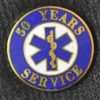
5 Year EMS Service Pin
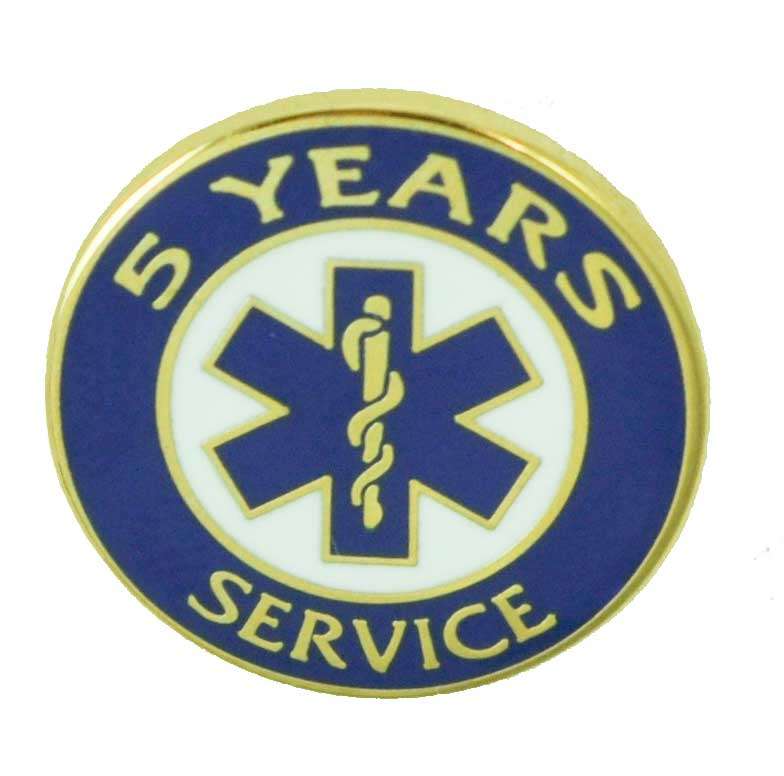
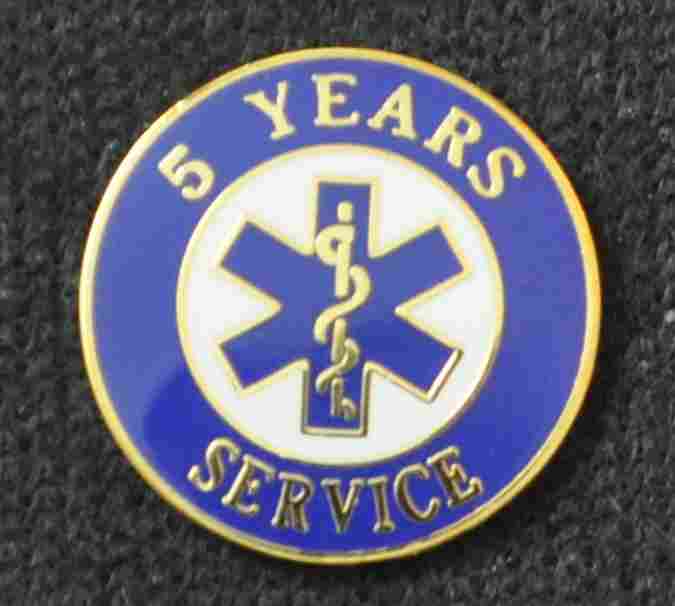
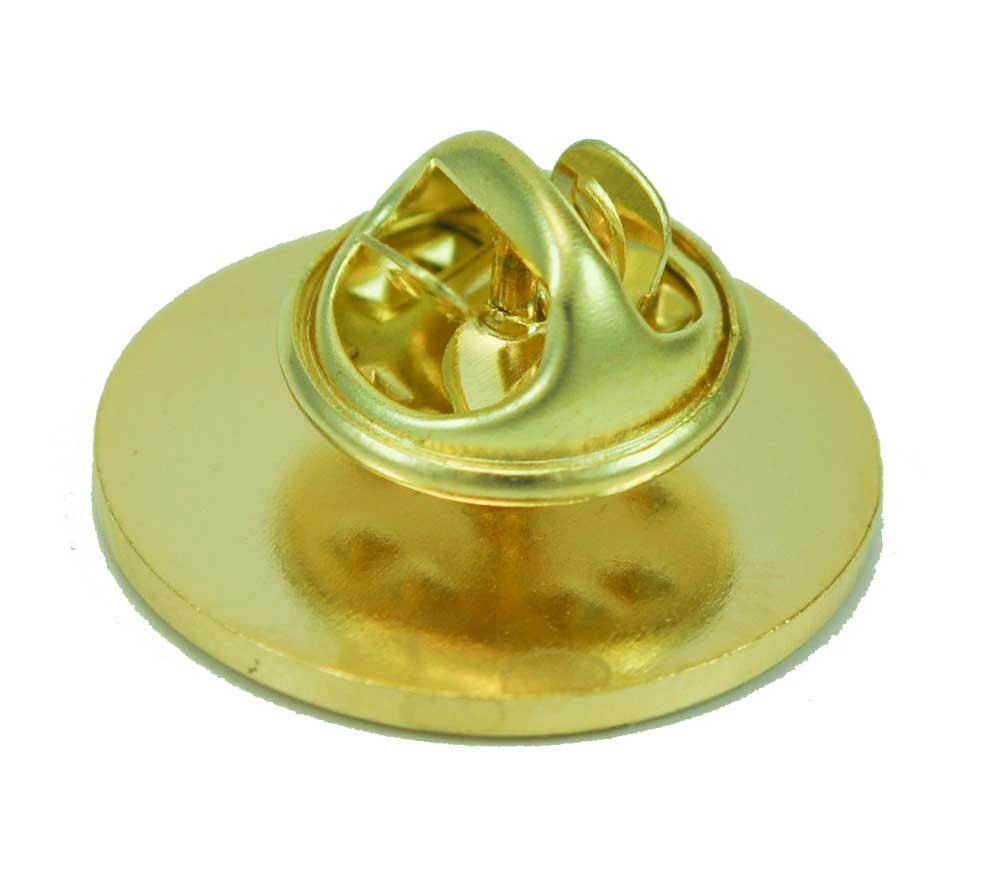
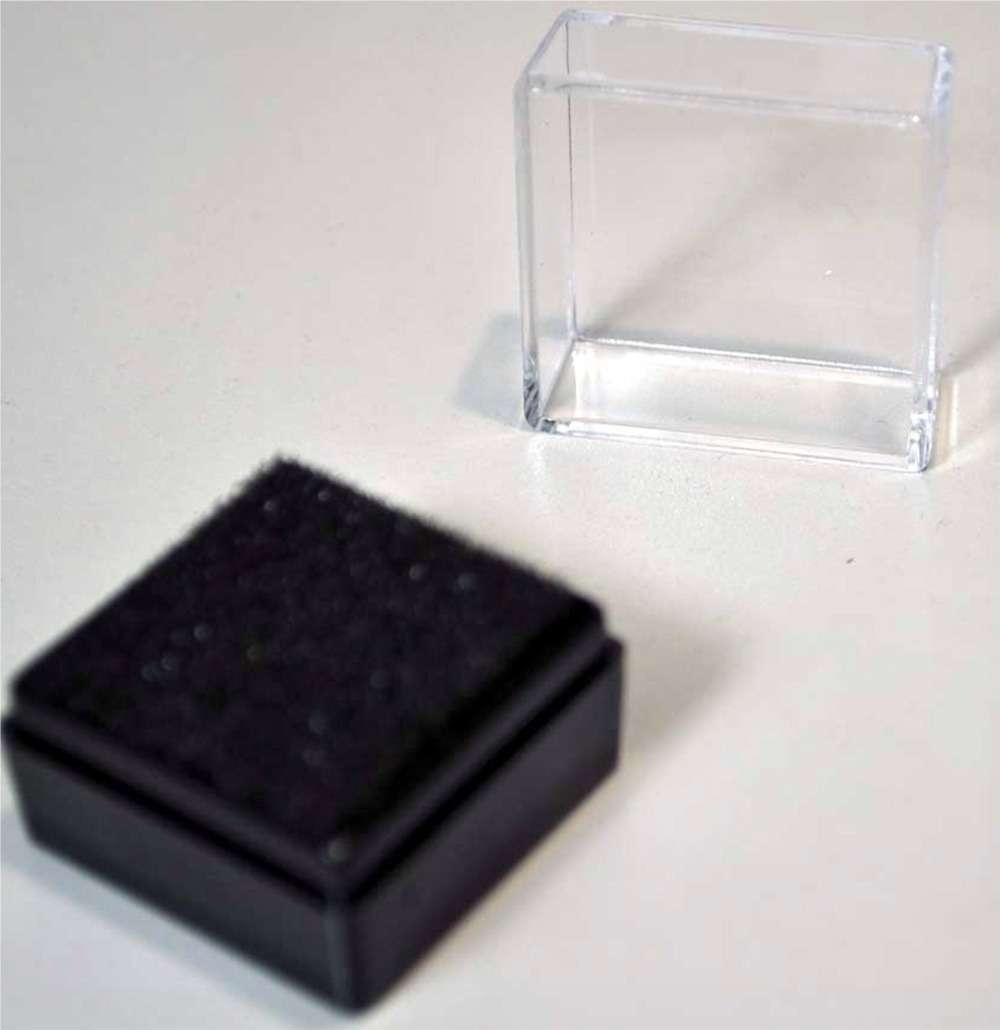
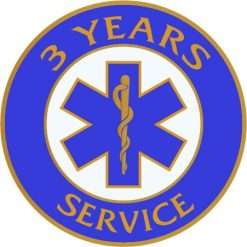
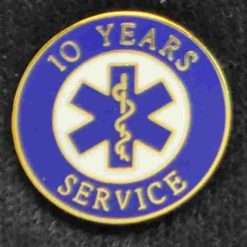
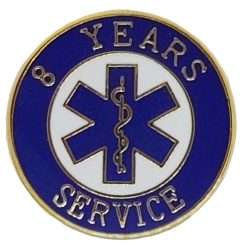
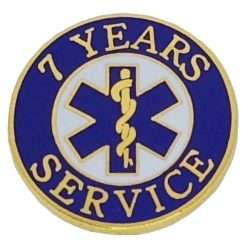
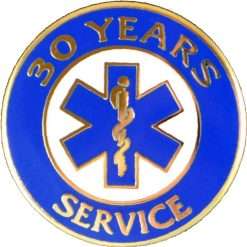
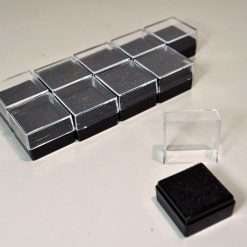
A beautiful 3/4-inch diameter round EMS Years of Service pins feature a blue star of life on a white field. Outer blue with ring the words 5 Years EMS Service, Uniform Pins, Years of EMS Service, EMS Recognition Pins. You can choose in an individual Poly Bag or a handsome Presentation box ready to present.
EMTs and Paramedics have a shorter career span than other first responders. A 5 years of service pin working on a rig as either a volunteer professional or paid professional is tougher than most other fields. You have interacted with hundreds of injured and ill patients in every environmental and emotional state. Your skills help you teach others coming up and be a role model for what is expected in the field, your family, and any medical setting. At the end of your first 5 years, it is wonderful to receive your EMS years of service pin from your agency.
Or you may be an EMT or Medic who works outside of the normal EMS system: Say, as a First Responder in the field, a Park Ranger, a company safety officer, or a rescue medic. You too need to be recognized as the person who is first to work on the patient.
Luckily, SafetyStore.com not only sells thousands of EMS years of service pins, but our Founder received a few himself, so we know how important it is to keep these EMS Service pins stocked year-round and shipped out the door quickly. We stock each year from 1 year to 20 years, and then every 5 years from 25 to 50 years, so you can honor your EMTs to Paramedics whenever they hit a new milestone.
Hey, when is EMS week anyway?
National EMS Week takes place May 17–23. It falls during the third full week of May to honor the lifesaving contributions of EMTs, paramedics, dispatchers, and first responders.
How to get started as an EMT?
The History of the Star of Life Emblem in the USA
The Star of Life is a widely recognized symbol associated with emergency medical services (EMS) and medical assistance. This was due to American Red Cross copyright objections to ambulances and hospitals using the same symbol. It consists of a blue, six-pointed star with a white border, featuring the Rod of Asclepius, a serpent-entwined rod, in the center. The history of the Star of Life is closely tied to the development and standardization of emergency medical services in the United States. The symbol applies to all emergency medical goods and services that are funded under the DOT/EMS program.
In the early 1960s, a need for a universally recognized symbol for ambulances and emergency medical personnel became apparent. The U.S. National Highway Traffic Safety Administration (NHTSA) initiated efforts to develop a distinctive emblem that would be easily identifiable and convey the presence of medical assistance. The American Medical Association and the National Academy of Sciences’ National Research Council were also involved in the project.
In 1963, the NHTSA’s “Highway Safety Act” was passed by the U.S. Congress, which led to the formation of the Department of Transportation (DOT) and the establishment of the Emergency Medical Services Systems (EMSS) program. As part of the EMS program, the need for a recognizable symbol for ambulances and medical personnel was emphasized.
The Star of Life was designed by Leo R. Schwartz, an artist and medical illustrator, in 1965. Mr. Schwartz and the National Highway Traffic Safety Administration (NHTSA) created a symbol that would be easily identifiable and evoke a sense of emergency medical care. He drew inspiration from the Staff of Asclepius, a classical Greek symbol associated with healing and medicine, which features a serpent-entwined rod.
The Star of Life, with the Rod of Asclepius in the center, was chosen as the emblem for the EMSS program. The symbol was trademarked by the American Medical Association (AMA) in 1977, ensuring its official recognition and protection.
Since its creation, the Star of Life has become widely adopted internationally as a symbol for emergency medical services. It is displayed on ambulances, medical equipment, uniforms, and other items associated with EMS. The symbol represents the care, compassion, and professionalism of those who provide pre-hospital medical care and serves as a beacon of hope in times of emergency.
It is important to note that the Star of Life is often confused with the Caduceus, which features two snakes and wings and is associated with commerce and negotiation. However, the Caduceus is historically incorrect when used as a medical symbol and is not officially recognized for such purposes. The Rod of Asclepius, depicted in the Star of Life, is the appropriate symbol for medicine and healthcare.
| Dimensions | 0.5 × 1 × 1 in |
|---|---|
| Poly Bag or Presentation Box | Poly Bag, Presentation Box |
Be the first to review “EMS 5 Years of Service Pin”
Related products

*EMS Years of Service Pins
*EMS Years of Service Pins

*EMS Years of Service Pins
*EMS Years of Service Pins
*EMS Years of Service Pins
*EMS Years of Service Pins
*EMS Years of Service Pins
*EMS Years of Service Pins
Reviews
There are no reviews yet.