
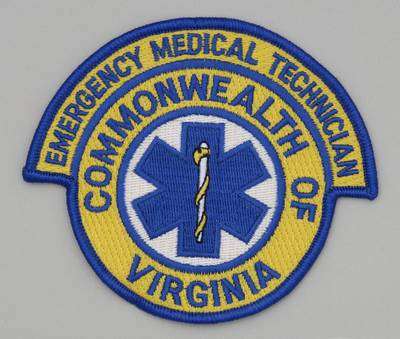

Virginia Emergency Medical Technician Patch
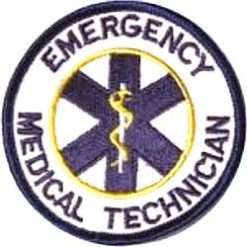
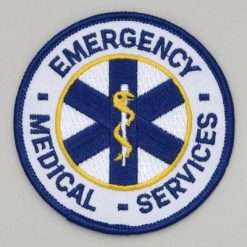
Our embroidered Virginia Emergency Medical Technician Patch is 3-1/2″ by 4-1/8″ in blue, gold, and white background. It is not a cheap knockoff VA EMT patch; this is the highest-quality 100% embroidery with stiff backing for a professional look on your uniform that lasts and lasts. Long-wearing this patch will look great on your uniform or gear. Check out our volume discounts.
How many Virginia EMT patches do I need?
If you are brand new to EMS and not connected to a group or company, you do not want to be covered in ID. (it makes you look tacky and more experienced EMS personnel will make fun of the new guy) It is OK generally to have a patch on your gear bag or a safety vest that says EMT if you first arrived at an auto accident just to stabilize things until the cavalry arrives).
On average, an ambulance company or rescue squad will issue 6 uniform shirts per employee. Some will also have a jacket with the EMT patch on one or both sleeves. Here in Virginia, it is typical to see the official EMS patch on one sleeve and an American Flag or Company uniform patch on the other. Other groups may opt for polo shirts with a county or company logo with or without official uniform patches. The important thing is to work in a uniform with an identifiable look for both the patient and other first responders to understand your level.
Becoming an EMT in Virginia
Becoming an Emergency Medical Technician in Virginia is not that difficult. It is a great platform on which to build more advanced training in EMS, Fire Nursing, or Medical School. It helps teach you to be aware of emergencies and medical problems faster than the average public. It teaches you how to help and communicate with people from all different backgrounds.
Getting Started in EMS:
It does require taking and getting good at basic CPR and first aid skills before you sign up for an EMT class. Generally, you must be 18 years old at the time you complete your program, but with parental permission, you can be as young as 16. The key to being a promising successful EMT is practicing the basic skills repeatedly until they are second nature. Practicing good, CPR, airway management, bloodborne precautions, learning secondary assessments (this is asking good questions about the patient) stethoscope, and blood pressure skills will help you be confident in most situations.
| Dimensions | 4 × 4 in |
|---|
Be the first to review “Virginia Emergency Medical Technician EMT – Embroidered Patch”
Related products

EMS Patches
EMS Patches
EMS Patches

EMS pins
EMS Patches
EMS Patches
EMS Patches
Reviews
There are no reviews yet.